-

-
Legal Entities
-
Taxpayer registration
- New registration
- Taxpayer number
- Updating registration profile
- Migration
- Termination of registration
- Obligation
Digital signature
-
Obtaining statement
Tax report and payment
-
Taxes
-
-
Individuals
-
Taxpayer registration
Obtaining statement
-
Digital signature
Tax report and payment
-
Taxes
-
-
Tax Education
-
For the future tax payers
-
For the taxpayers
-
Others
-
- Consultation
-
International taxation
-
Legislation
-
Information exchange
-
International experiences
-
News
News.

Date: 12/13/2019
12906







News and Conferences
MONGOLIA JOINS THE ADDIS TAX INITIATIVE
Огноо: 1/10/2020
10650
The Addis Tax Initiative (ATI) is pleased to welcome the newest ATI member Mongolia and acknowledge their commitment to increasing domestic revenue mobilisation (DRM) towards sustainable development. The Addis Tax Initiative continues to grow, now including 25 partner countries, 20 development partners and 16 supporting organisations.Mongolia has signalled its ambition for tax reform in recent yea
.JPG?width=262&height=151&mode=carve)
Tomas Balco, senior adviser in the BEPS capacity building team at OECD, visited Mongolian Taxation Administration
Огноо: 12/13/2019
10637
Mr. Tomas Balco, senior adviserin the BEPS capacity building teamat OECD, with role and responsibility to help different countries in the implementation of the BEPS recommendations, and with the experience ofworking with the different countries which are part of the inclusive framework which are 135 countries from all over the world on finalizing the different recommendations involving transfer pr

Global Forum and ADB experts visited General Department of Taxation, Mongolia
Огноо: 12/13/2019
12906
Global Forum and ADB experts visited General Department of Taxation, Mongolia.The mission consisting of Lloyd Garrochinho, expert of Global Forum of OECD, Christine Fox, information security advisor at ADB, and Michael Speldewinde, cyber security expert at OECD, was intended for review of previous requirements and assist Mongolian Tax Administration before it has been assessed for the Exchange of
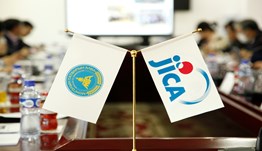
The MTA and JICA Joint Coordinating Committee Meeting was held
Огноо: 12/13/2019
10497
The mission of JICA lead by Ms. Erina Ogata, deputy director of Public Governance and Financial Management Team, Industrial Development Department of JICA, visited the Mongolian Tax Administration to participate in the Sixth Joint Coordinating Committee Meeting and to discuss the next phase to the MTA and JICA joint project on 5 and 6 of December, 2019.The Joint Coordinating Committee Meeting was

Mongolia joins as the 135th member of the Multilateral Convention on Mutual Administrative Assistance in Tax Matters
Огноо: 12/2/2019
10563
Mongolia joins as the 135th member of the Multilateral Convention on Mutual Administrative Assistance in Tax Matters. The Convention creates an opportunity for its members to exchange information for tax purposes with over 130 countries, and the participating countries commit to the international standards of safeguarding the confidentiality of the information exchanged. Tax havens, offshore regio
The international day of older people
Огноо: 10/17/2019
10537
The General Department of Taxation and the Large Taxpayer Office received the tax retirees on the international day of older people. Commissioner Mr. Zayabal Batjargal introduced the tax law reform, and upcoming consequential reforms during the day. He invited the retirees to work at the call centre on contract, and provide consultancies in preparing guidance and methodologies. Mr. Bavuusuren, on
.jpg?width=300&height=200&mode=crop)
.JPG?width=300&height=200&mode=crop)
Best tax payers